· Updated:
The most representative dance and song of Aragón. History, styles and where to see it in Zaragoza
The Aragonese Jota is the quintessential music and dance of Aragón, a lightning-fast display of footwork, passion, and precision that has been declared a Bien de Interés Cultural (Asset of Cultural Interest) and stands as one of Spain's most technically demanding and emotionally powerful folk traditions.
The Jota has deep roots in Aragonese culture, with origins that are fiercely debated by historians. Some trace it to the troubadours of the medieval Crown of Aragon, who travelled between the courts of the kingdom singing love songs and epic ballads. Others date it to the 18th century, when the Jota emerged as a distinct genre in the countryside around Zaragoza and the Ebro Valley. The first written references to the 'Jota aragonesa' appear in the 1790s, describing a dance that was already considered traditional by then.
What is clear is that the Jota flourished in the 19th century as a form of popular entertainment at village festivals, weddings, and patron saint celebrations. Each region of Aragón developed its own style: the Jota from the Pyrenean valleys is more restrained, reflecting the mountain temperament; the Jota from the Ebro Valley is faster and more exuberant; and the Jota from the southern province of Teruel has a distinctive melancholic quality. The Zaragoza style, known as the 'Jota de la tierra', is the most technically demanding, with rapid-fire footwork that takes years to perfect.
The golden age of the Jota came in the early 20th century, when professional troupes — known as 'cuadros de jota' — toured Spain and Latin America, spreading Aragonese culture across the Spanish-speaking world. Legendary performers like Miguel Fleta (an operatic tenor who also sang Jota) and the dancer Pilar de Aragón elevated the genre to an art form that was celebrated by intellectuals and artists, including Federico García Lorca and the Aragonese painter Francisco de Goya, who sketched Jota dancers in his notebooks.
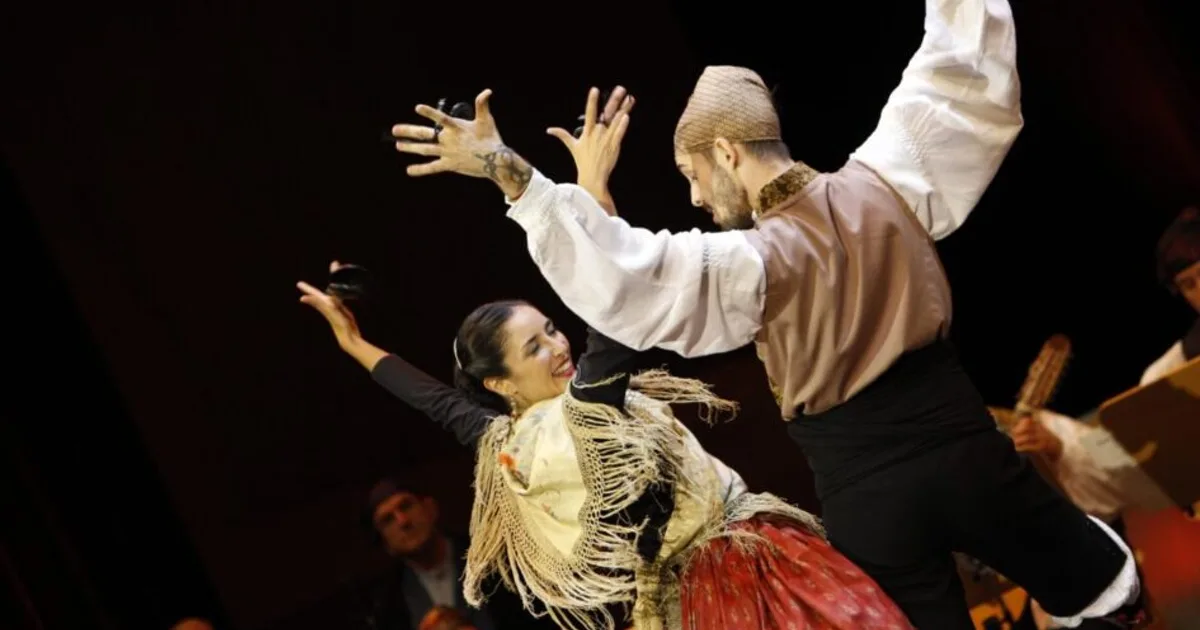
The Aragonese Jota is performed by a small ensemble called a 'rondalla', typically consisting of guitars, bandurrias (pear-shaped string instruments), and laúdes. The distinctive sound comes from the rapid strumming patterns and the harmonic richness of the combined strings. Castanets ('castañuelas') provide the rhythmic backbone, and in the Aragonese tradition, they are larger and louder than those used in flamenco, producing a sharp, percussive sound that carries over the dancers' footwork.
The vocal part is performed by a 'cantador' (male or female singer), who delivers the letras (lyrics) in a powerful, ornamented style. The lyrics are typically structured in four-line stanzas (copla) or five-line stanzas (quintilla) and cover a wide range of themes: love, loss, homesickness for the Aragonese countryside (a theme known as 'la tierra'), religious devotion, and social commentary. Many Jotas contain piercingly beautiful melodies that shift from major to minor keys within a single stanza, reflecting the Aragonese character — passionate, proud, and unafraid to show emotion.
Watching a Jota dancer is a lesson in controlled intensity. The upper body is held almost motionless — the arms rise and fall in graceful arcs, the hands rotate at the wrists, and the head remains upright — while the feet execute a rapid, percussive rhythm against the floor. The zapateado (footwork) is the centrepiece of the dance: a machine-gun staccato of heel-and-toe strikes that seems impossible to sustain for more than a few seconds, yet the best dancers maintain it for minutes at a time without losing precision or speed.
The costumes are an essential part of the performance. Women wear the traditional 'zagalejo' — a wide, embroidered skirt that flares dramatically during turns — with a white blouse, a colourful shawl crossed at the chest, and a lace headdress (mantilla) often adorned with flowers. Men wear tight black or grey trousers, a white shirt with a red sash (fajín) at the waist, a short jacket (chaquetilla), and a broad-brimmed hat (sombrero de ala ancha). The contrast between the women's flowing, colourful skirts and the men's sharp, controlled movements is visually stunning.
Zaragoza is the best place in the world to experience the Aragonese Jota. The city has a living tradition that goes beyond tourist shows. Here are the best places to see it:
The Jota is a living tradition, not a museum piece. Young dancers continue to take it up, new compositions are being written, and the passion for this art form shows no sign of fading. To understand Aragón, you need to experience the Jota at least once.
The Aragonese Jota has influenced Spanish music far beyond its regional borders. Composers like Manuel de Falla (in his ballet 'El Amor Brujo') and Enrique Granados incorporated elements of the Jota into their works. The Jota is also the basis for some of the most famous passages in the Spanish zarzuela tradition. Outside Spain, the Jota's influence can be heard in the folk music of Latin America, particularly in Mexico and Argentina, where Aragonese immigrants brought their music in the 19th and early 20th centuries.
The Jota is deeply connected to other aspects of Aragonese identity, including the 'mano' nickname of Zaragoza locals — both are expressions of a proud, distinct regional culture. If you are planning a cultural trip, combine a Jota evening with a wine tour of the Aragonese DO regions for an immersive experience of the region's soul.
Sala de la Jota: Centro de Historia de Zaragoza, Plaza San Agustín, 2. Free entry. Check the city council website for the programme.
Fiestas del Pilar: 12 October and the surrounding week. Most Jota performances are free and outdoors.
Jota workshops: Introductory classes at Escuela Municipal de Jota (Calle San Pablo, 42) cost around €15 for a 2-hour session.
Dinner shows: €35–€55 per person including a full Aragonese meal and a 45-minute Jota performance.
Best time to visit: October during the Fiestas del Pilar is the peak season. Spring and autumn weekends also have regular performances.
The Aragonese Jota is a traditional music and dance genre from Aragon, characterised by rapid footwork, graceful arm movements, and passionate singing accompanied by guitars, bandurrias, and castanets. It is the most representative folk expression of Aragonese culture and has been declared a Bien de Interés Cultural (Asset of Cultural Interest).
The Aragonese Jota is faster and more technically demanding than its Valencian or Navarrese counterparts. Its footwork (zapateado) is quicker and louder, the arm movements are wider and more expressive, and the vocal style is more forceful and ornamented. The Aragonese Jota also has a wider range of emotional expression, from joyful celebration to lament.
The best place is the Sala de la Jota in the Centro de Historia de Zaragoza, which hosts regular performances. During the Fiestas del Pilar (October), there are daily Jota performances in Plaza del Pilar and the Parque Grande. Many local peñas jotas (Jota clubs) also hold open rehearsals, and several restaurants offer Jota shows with dinner.
The traditional Jota ensemble includes guitars, bandurrias (Spanish pear-shaped string instruments), laúdes (lutes), castanets (often oversized in Aragonese style), and sometimes the dulzaina (a double-reed wind instrument similar to a shawm). The vocal part is typically performed by a solo singer (cantador) with choral responses.
Yes. Several dance academies in Zaragoza offer introductory workshops for tourists, including the Escuela Municipal de Jota and the Peña El Jotero. These classes typically last 1–2 hours and teach basic steps and arm positions. No prior dance experience is needed. It is a fun and active way to connect with Aragonese culture.
Stay in the heart of Zaragoza and walk to the Jota venues. Maestro Luna is centrally located, a short walk from the Centro de Historia and the main festival stages. Las Armas offers a peaceful retreat by the river, with easy access to the old town and its cultural venues. Book with QueenBNB and make the Aragonese Jota part of your Zaragoza experience.
Make Zaragoza your base. Our boutique apartments are just minutes from all attractions.
Maestro Luna Apartment Las Armas Apartment