· Updated:
History, architecture and significance of Zaragoza's most emblematic bridge over the Ebro
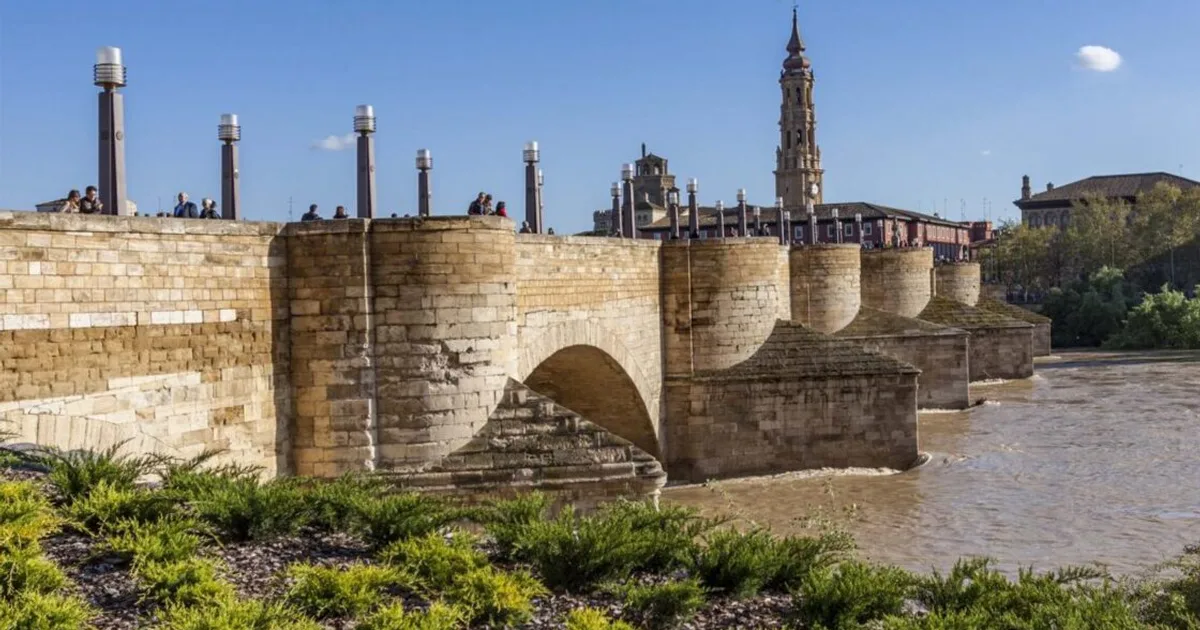
The Stone Bridge (Puente de Piedra) is Zaragoza's most iconic bridge and the oldest surviving crossing point over the Ebro River, a seven-arch stone masterpiece that has connected the city's historic centre with the right bank for more than five centuries.
The story of crossing the Ebro at Zaragoza goes back nearly two millennia. The Romans built the first bridge here during the reign of Augustus, connecting the newly founded colony of Caesaraugusta with the road network that linked Tarraco (Tarragona) to the interior of Hispania. That Roman bridge was a remarkable engineering feat for its time, but by the early Middle Ages it had fallen into disrepair and was eventually washed away by one of the Ebro's notorious floods.
In the 12th century, a new medieval bridge was constructed on the same site, but it too suffered from the Ebro's powerful currents. The bridge we see today was built in the 15th century during the reign of Alfonso V of Aragon. Its design prioritised durability: seven solid stone arches with massive pillars reinforced by pointed cutwaters to break the force of the current. The bridge has survived flooding, war, and the wear of daily use for over 500 years.
One of the most dramatic moments in the bridge's history came in 1643, when a catastrophic flood — known locally as the riada de San Calixto — destroyed two of its arches and severely damaged others. The reconstruction took decades and led to important engineering improvements that have kept the bridge standing ever since. On the central pier, you can still see stone markers recording the water levels of major historical floods — a humbling reminder of the Ebro's power.
The bridge stretches 225 metres across the Ebro and is built entirely from ashlar stone blocks. Its seven arches are not identical: the three central arches are wider and higher to allow the bulk of the river's flow to pass through, while the two arches at each end are smaller. This asymmetrical design was a deliberate engineering choice based on the river's behaviour at different water levels.
Each pier is protected by triangular cutwaters that rise to street level, creating small refuges for pedestrians — a feature common in medieval bridges but rare in bridges of this scale. At the downstream end of the central pier, there is a small statue of the Virgen del Pilar, placed there in the 18th century as a protective gesture. Few people notice it from street level, but it is visible from the water.
In the 19th century, iron railings replaced the original stone parapets, giving the bridge a lighter appearance. The city has also added decorative lighting that illuminates the arches at night, making the bridge a striking sight from the Pilar esplanade after dark.
Walking across the Stone Bridge is one of the essential experiences of any visit to Zaragoza. From the centre of the bridge, you get the single best view of the Pilar Basilica: the entire baroque facade rises behind the bridge's arches, reflected in the waters of the Ebro. It is the postcard image of Zaragoza, and for good reason.
The bridge connects directly to the Pilar Plaza on one side and to the Alfonso I Street axis on the other, making it a natural part of any walking tour. From here you can easily reach the Pilar Panoramic Lift for a bird's-eye view of the entire city, or simply follow the riverside promenade east towards the Parque del Agua.
For locals, the Stone Bridge is more than a piece of infrastructure — it is a symbol of the city's relationship with the Ebro. The bridge has been the backdrop for countless festivals, processions, and celebrations. During the Fiestas del Pilar in October, the bridge is draped in banners and brightly illuminated, and the riverside becomes the epicentre of the festivities. In summer, the area underneath the arches is a favourite spot for young people to gather by the water.
The bridge also features prominently in Zaragoza's literature and folklore. The 17th-century writer Baltasar Gracián referenced it in his works, and it appears in the background of countless paintings and photographs spanning four centuries. More recently, it has become a favourite backdrop for wedding photos and engagement shoots.
Location: Connects Plaza del Pilar with the right bank of the Ebro River, 50001 Zaragoza.
How to get there: A 5-minute walk from Plaza España. Bus lines 21, 22, 29, 34, 35, 36, 39, 40, 41, 42 stop at Pilar. Tram stop: Plaza del Pilar.
Access: Free and open 24 hours a day. Fully accessible for wheelchairs and pushchairs.
Best time to visit: Sunset for photographs. Early morning (before 9 AM) for a peaceful walk without crowds.
Nearby: Pilar Basilica, La Seo Cathedral, Roman Forum museum, Alfonso I Street.
The current Stone Bridge dates from the 15th century, built on the foundations of an earlier Roman bridge and a 12th-century medieval bridge. It has stood for over 500 years despite numerous devastating floods of the Ebro River.
Puente de Piedra simply means 'Stone Bridge' in Spanish, a reference to its construction from ashlar stone blocks. It is also known as Puente de Nuestra Señora del Pilar because of its proximity to the Pilar Basilica.
Yes, the bridge is pedestrian-friendly and one of the most popular walking routes in Zaragoza. It connects the Pilar Plaza to the Ebro's right bank and offers spectacular views of the basilica reflected in the river.
The bridge has seven stone arches that span approximately 225 metres across the Ebro. The central arches are the largest, designed to allow the river's flow to pass even during major floods.
Sunset is the most photogenic time. The golden hour light illuminates the Pilar Basilica behind the bridge, creating a reflection on the Ebro that is Zaragoza's most iconic image. Blue hour just after sunset is equally stunning.
Both of our apartments are just minutes from the Stone Bridge. Maestro Luna is a five-minute walk away on the Plaza España side, while Las Armas offers a quieter riverside location with direct access to the Ebro promenade. Both are perfectly positioned for exploring the Pilar, the bridge, and the entire historic centre on foot.
Make Zaragoza your base. Our boutique apartments are just minutes from all attractions.
Maestro Luna Apartment Las Armas Apartment