· Updated:
Zaha Hadid's iconic work crossing the Ebro
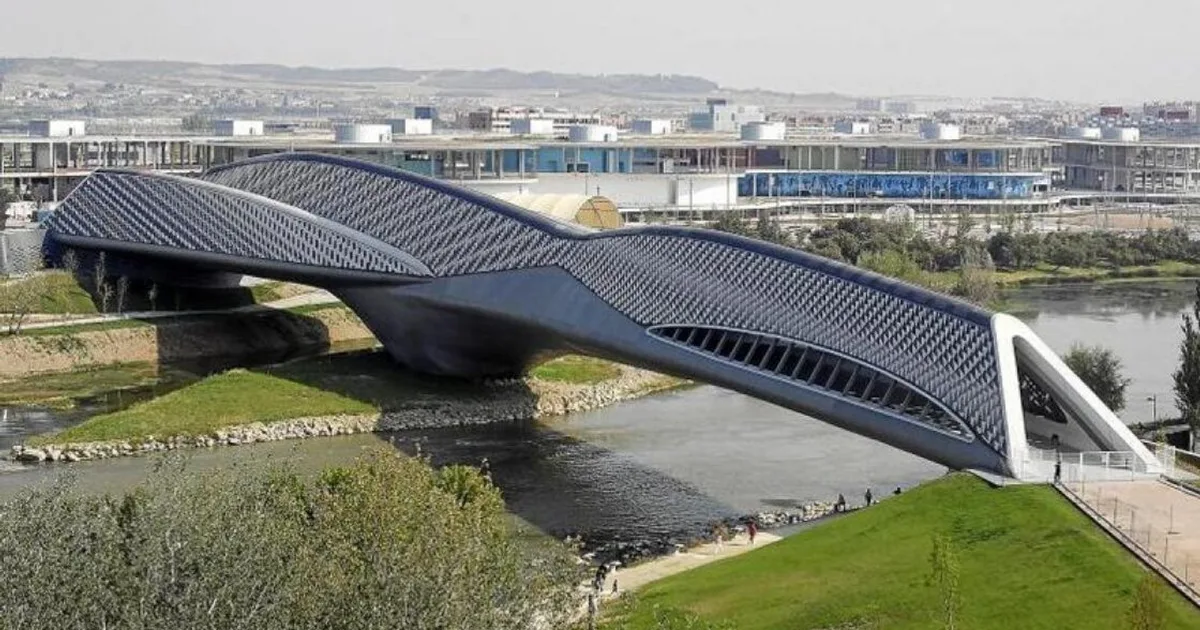
The Bridge Pavilion (Pabellón Puente) is Zaragoza's most audacious piece of contemporary architecture — a 280-metre-long structure that functions simultaneously as a pedestrian bridge across the Ebro and as an exhibition pavilion. Designed by the legendary Zaha Hadid, the first woman to win the Pritzker Architecture Prize, this extraordinary building was the centrepiece of Expo 2008, which was held in Zaragoza under the theme "Water and Sustainable Development."
Hadid's design draws inspiration from the gladiola flower, with four elongated petals that appear to unfurl across the river. The structure is a feat of engineering: a steel-and-concrete composite deck supported by inclined arches, clad in a striking white composite panel that catches the light differently at every hour of the day. Walking across it feels less like crossing a bridge and more like passing through a living sculpture. From a distance, its organic silhouette against the Ebro creates one of the most photographed vistas in modern Zaragoza.
The bridge is divided into four interlinked segments that echo the petals of its floral inspiration. The deck widens and narrows organically, creating interior spaces that vary from intimate galleries to grand open halls. The sloping triangular supports, or "spines," rise from the water and anchor the structure to both riverbanks with elegant precision. Hadid's characteristic fluidity is everywhere — there is not a single right angle in the entire building.
The interior was originally designed to house the "Water, a Unique Resource" exhibition during Expo 2008, featuring interactive displays about global water challenges. Since the Expo, the pavilion has operated as a cultural venue hosting temporary exhibitions, conferences and events. Even when the interior is closed, the bridge itself remains open 24/7 as a public pedestrian and cycle route, offering unique views of the Ebro both upstream towards the Stone Bridge and downstream towards the La Almozara neighbourhood.
Expo 2008 transformed Zaragoza's relationship with its river. Before the Expo, the Ebro's right bank in the Actur district was largely undeveloped. The Expo created an entirely new waterfront — the Parque del Agua Luis Buñuel, one of the largest urban parks in Spain, and a series of iconic pavilions that have since been repurposed. The Bridge Pavilion remains the most emblematic of these structures, a symbol of the city's ambition to reinvent itself as a modern, forward-looking European capital.
The Expo site is now integrated into the city's fabric. The park is a beloved recreational space for runners, cyclists and families. The adjacent convention centre, the Palacio de Congresos, hosts major events. And the Bridge Pavilion continues to draw architecture enthusiasts from around the world who come specifically to experience Hadid's work in person.
You can walk or cycle across the Bridge Pavilion at any time — it is a free, public pedestrian bridge. The best approach is from the Paseo de la Ribera on the city centre side, which connects to the Ebro promenade. Crossing takes about 10 minutes at a leisurely pace, allowing time to stop and admire the views through the glazed sections of the facade.
For photography, the golden hour before sunset is spectacular — the low sun illuminates the white panels with warm light while casting dramatic shadows through the structural elements. The most famous vantage point is from the Stone Bridge (Puente de Piedra) 800 metres upstream, where the Bridge Pavilion appears framed against the waters of the Ebro with the park beyond.
Location: Crossing the Ebro between Paseo de la Ribera and Actur-Rey Fernando district
Access: Free pedestrian and cycle bridge, open 24/7
Interior exhibitions: Opening hours vary — check the Zaragoza cultural agenda
Nearest bus stop: "Pabellón Puente" on lines 21, 22, 23 and 24
Best time for photos: Golden hour (sunset), from the Stone Bridge viewpoint
The Bridge Pavilion is easily reached from anywhere in central Zaragoza on foot or by bike along the Ebro promenade (a 20-minute walk from Plaza del Pilar).
Centrally located in the historic quarter, our Maestro Luna apartment is a 25-minute walk along the river to the Bridge Pavilion. Sleeps 4 guests with all modern comforts. View Maestro Luna →
Closer to the Actur district, the Las Armas apartment is just a 10-minute walk from the Bridge Pavilion. Modern two-bedroom apartment perfect for architecture enthusiasts. View Las Armas →
The Bridge Pavilion (Pabellón Puente) is a 280-metre-long structure designed by Zaha Hadid that serves as both a bridge across the Ebro and an exhibition pavilion. It was built as the centrepiece of Expo 2008.
The Bridge Pavilion was designed by the renowned Iraqi-British architect Zaha Hadid, who was the first woman to receive the Pritzker Architecture Prize.
The exterior is freely accessible as a pedestrian bridge and cycle path. The interior exhibition space is open during special events and exhibitions — check the Zaragoza City Council website for current openings.
The Bridge Pavilion is 280 metres long. Its organic, gladiola-inspired form makes it one of the longest bridge-buildings in the world.
The Bridge Pavilion crosses the Ebro river connecting the city centre with the Expo 2008 site in the Actur-Rey Fernando district, east of the city centre.
Also discover: Roman Theatre of Zaragoza — ancient engineering that is just as impressive as contemporary, and Group Outings from Zaragoza for guided architectural tours of the city.
Make Zaragoza your base. Our boutique apartments are just minutes from all attractions.
Maestro Luna Apartment Las Armas Apartment