· Updated:
The great colosseum where the people of Caesaraugusta were entertained
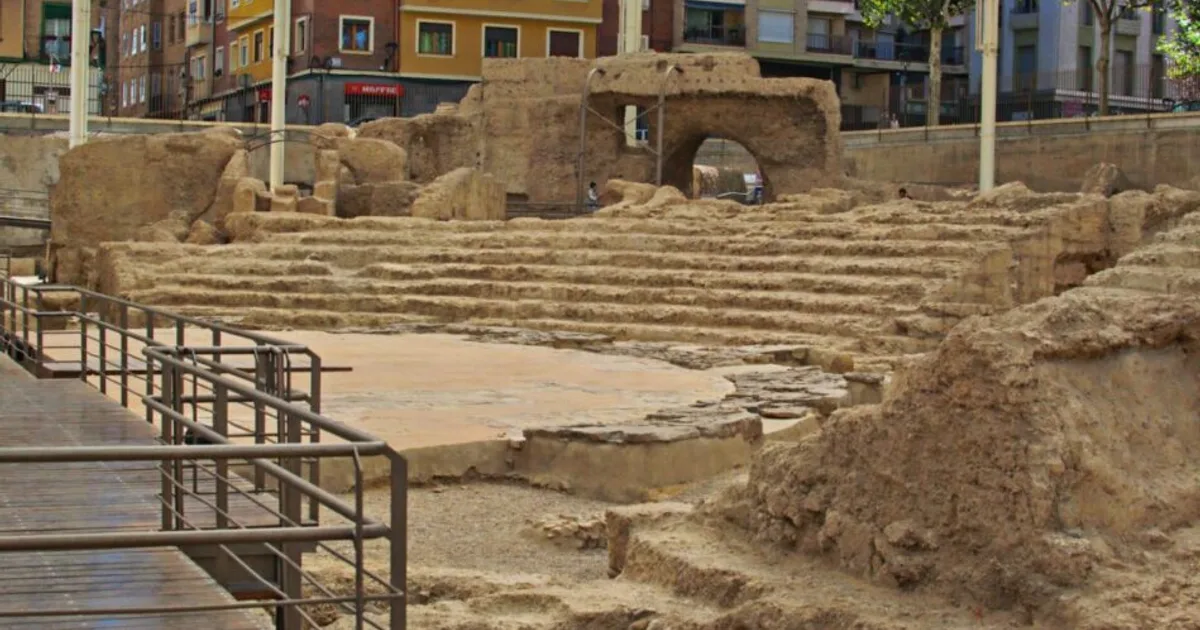
The Roman Theatre of Caesaraugusta is one of the most impressive surviving monuments from Roman Zaragoza. Built in the 1st century AD during the reign of Emperor Tiberius, it had a capacity of approximately 6,000 spectators — a clear indicator of the importance and prosperity of the colony of Caesaraugusta within the Roman Empire. The theatre follows the classic Roman design with a semicircular cavea (seating area) measuring 106 metres in diameter, making it one of the largest in the Iberian Peninsula.
The theatre was discovered entirely by chance in 1972 during foundation work for a new building on Calle San Jorge. What emerged from beneath the rubble was nothing short of extraordinary — tier upon tier of original seating, the stage foundation and fragments of the scaenae frons (the ornamental stage front). Subsequent archaeological campaigns revealed the theatre had been abandoned in the 3rd century AD and subsequently used as a quarry, with many of its stones incorporated into later buildings across the city. Despite this pillaging, the surviving remains are remarkably complete and offer a vivid glimpse into Roman urban life.
The theatre has been museumised in an exemplary fashion, combining conservation with an immersive visitor experience. The tour is divided into two complementary parts.
The visit typically takes 45 minutes to an hour. The interpretation centre is fully accessible and the walkway has a lift, making the site suitable for visitors with reduced mobility.
The theatre is part of a network of four Roman museums in Zaragoza known as the Caesaraugusta Route. The other three are the Forum Museum (Plaza de la Seo), the River Port Museum (Plaza del Pilar) and the Public Baths Museum (Calle San Juan de los Panetes). A combined ticket for all four costs €7 and is an exceptional deal — each site covers a different aspect of daily life in Roman Caesaraugusta.
Zaragoza's Roman heritage is remarkably accessible. Unlike many Spanish cities where Roman remains are buried beneath the modern urban fabric, Caesaraugusta's monuments have been systematically excavated, conserved and presented to the public in a coordinated museum circuit that rivals those of Tarragona and Mérida.
Address: Calle San Jorge 12, 50001 Zaragoza
Getting there: In the historic centre, 5 minutes from the Basilica del Pilar and 3 minutes from Plaza de España. Tram stop: Plaza de España.
Hours: Tuesday to Saturday 10:00-14:00 and 16:00-19:00. Sundays 10:00-14:00. Closed Mondays.
Admission: General €4. Combined 4-museum ticket €7. Free on Sundays.
Accessibility: Fully accessible with lift to the walkway level.
The Roman Theatre is located in the heart of Zaragoza's historic quarter, surrounded by tapas bars, shops and monuments. Staying within walking distance means you can explore the entire Roman circuit on foot without needing transport.
Just 100 metres from the Roman Theatre, our Maestro Luna apartment is perfectly positioned for exploring the Caesaraugusta route. Sleeps 4 guests in a beautifully restored historic building. View Maestro Luna →
A 10-minute walk along the Ebro river takes you from Las Armas to the theatre. Modern two-bedroom apartment ideal for families or couples. View Las Armas →
The Roman Theatre is at Calle San Jorge 12, in the historic centre of Zaragoza, just 5 minutes' walk from the Basilica del Pilar and 3 minutes from Plaza de España.
General admission is €4. A combined ticket for all four Caesaraugusta museums costs €7. Admission is free on Sundays.
Tuesday to Saturday from 10:00 to 14:00 and 16:00 to 19:00. Sundays from 10:00 to 14:00. Closed on Mondays.
The theatre had a capacity of approximately 6,000 spectators, with a cavea (seating area) measuring 106 metres in diameter.
The theatre was discovered in 1972 during construction work on a building at Calle San Jorge. Excavations revealed remarkably well-preserved remains from the 1st century AD.
Also discover: Graffiti and Murals of Alfamén — a fascinating open-air urban art museum an hour from Zaragoza, and Sigena Monastery for more Romanesque history.
Make Zaragoza your base. Our boutique apartments are just minutes from all attractions.
Maestro Luna Apartment Las Armas Apartment