· Updated:
A mosaic of architectural styles on the history of Zaragoza
La Seo de Zaragoza, officially the Cathedral of the Saviour, is one of Spain's most remarkable temples — a single building that embodies five architectural styles spanning Romanesque, Gothic, Mudejar, Renaissance and Baroque, built over seven centuries on a site that has been sacred since Roman times. The ground beneath your feet as you enter the cathedral was first a Roman forum, then a Visigothic church, then the Great Mosque of the Muslim Saraqusta, and finally the Christian cathedral that stands today. This unbroken chain of sacred use across nearly two millennia gives La Seo a spiritual depth that few buildings in the world can match.
The name "Seo" comes from the Latin "sedes" (seat), referring to the bishop's throne. The cathedral is the seat of the Archbishop of Zaragoza and shares the city's religious spotlight with the nearby Basilica del Pilar, creating one of the most extraordinary dual-cathedral arrangements in Christendom. While the Pilar dominates the skyline with its massive domes and towers, La Seo is the quieter, more contemplative sibling — a building that rewards those who take the time to study its details.
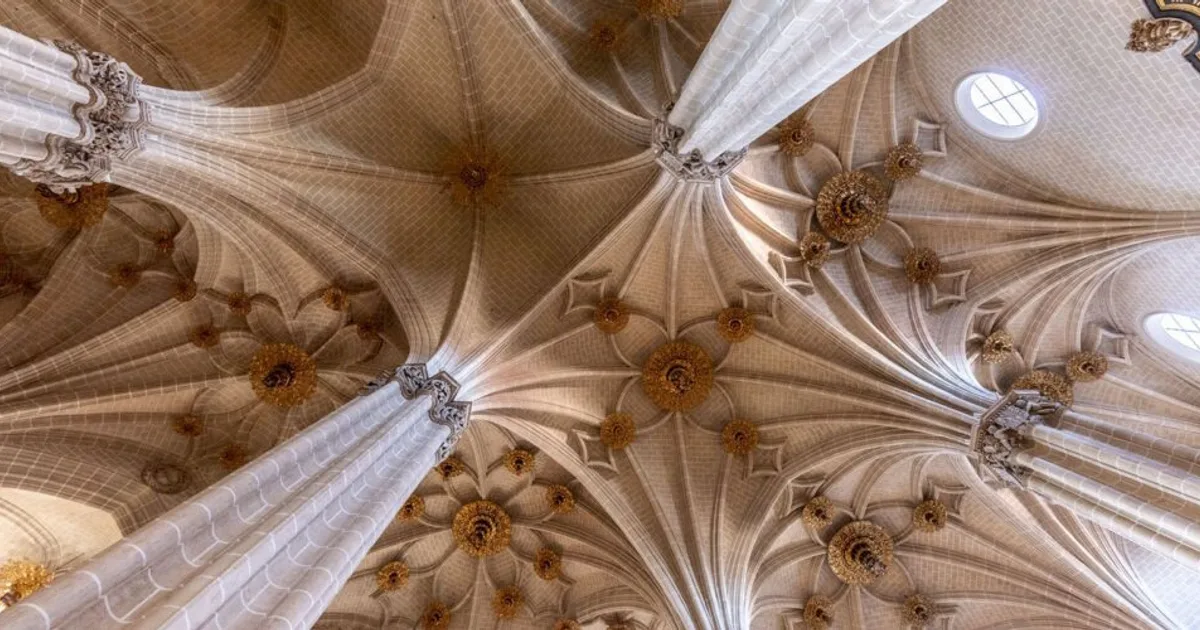
Entering La Seo is like walking through a textbook of architectural history. The oldest visible section is the Romanesque apse wall, built in the 12th century using stone recovered from Roman buildings. Above it rises the Gothic nave, completed in the 14th century with soaring ribbed vaults that draw the eye upward. The side chapels, added over successive centuries, display the transition from Gothic to Renaissance and finally to the ornate Baroque style that dominates the main chapel.
The undisputed masterpiece is the Mudejar cimborrio — the octagonal brick dome that crowns the crossing. Built in the early 16th century by Muslim artisans working for Christian patrons, it combines Islamic geometric patterns with Gothic structural forms. The exterior is sheathed in glazed ceramic tiles in green, white and blue that glow in the Zaragoza sunlight. UNESCO declared it a World Heritage site in 2001 as part of the "Mudejar Architecture of Aragón" inscription, recognising it as one of the finest examples of this uniquely Spanish fusion style.
The focal point of the interior is the magnificent alabaster altarpiece of the Chapel of St Michael, carved by the Catalan master Pere Johan and the German sculptor Hans von Schwarzenberg in the 15th century. This intricate work, measuring 14 metres high, depicts scenes from the life of Christ in breathtaking detail — each figure carved from a single block of translucent alabaster that seems to glow from within.
Beyond the main chapel lies one of Zaragoza's greatest treasures: the Tapestry Museum. This collection of Flemish tapestries from the 15th to 18th centuries is considered one of the most important in the world, rivaling the collections of the Louvre and the Prado. The tapestries depict biblical scenes, classical mythology and medieval allegories, woven in wool, silk and gold thread with a level of detail that must be seen up close to be believed. The museum alone is worth the price of admission.
Visitors who climb the Mudejar tower are rewarded with one of the best panoramic views of Zaragoza. From the top, you can see the Ebro river curving through the city, the massive domes of the Basilica del Pilar, the towers of the Aljafería Palace in the distance and the green expanse of the Grand Park. The tower climb is not for the faint-hearted — the staircase is narrow, winding and steep — but the view at the top is unforgettable.
A visit to La Seo pairs perfectly with the Aljafería Palace, which shares the same Mudejar architectural heritage and UNESCO designation. After exploring both monuments, a walk through the Grand Park of Zaragoza offers a welcome dose of nature. For those interested in the city's deep history, the experience can be complemented by a day trip to Belchite, where a different, more recent layer of Spanish history is preserved in the ruins of the old village.
La Seo is located in the heart of Zaragoza's historic centre, within easy walking distance of the city's finest accommodation. Our Maestro Luna apartment is a charming one-bedroom retreat just five minutes from the cathedral, ideal for couples seeking a cultural city break. The apartment combines original character with modern amenities, including a fully equipped kitchen, free WiFi and air conditioning. For families or groups, the Las Armas apartment provides two spacious bedrooms, a living-dining area and a riverfront location that is both peaceful and central. Book directly with QueenBNB for the best available rates.
Address: Plaza de la Seo, 4, 50001 Zaragoza
How to get there: 5 min walk from the Pilar. Bus lines 21, 22, 29, 34, 35, 36, 39, 40, 41, 42.
Opening hours: Mon-Sat 10:00-14:00 & 16:00-18:30. Sun 10:00-14:00.
Admission: General 5€ (includes Tapestry Museum). Reduced 3€.
La Seo de Zaragoza, officially the Cathedral of the Saviour, is a Catholic cathedral built on the site of the former Great Mosque of Zaragoza. It is unique among Spanish cathedrals for combining five distinct architectural styles — Romanesque, Gothic, Mudejar, Renaissance and Baroque — reflecting its construction over seven centuries from the 12th to the 18th century.
La Seo is the city's cathedral (the seat of the archbishop), while the Basilica del Pilar is a separate major church. La Seo is older and architecturally more diverse, with its famous Mudejar tower and UNESCO-listed cimborrio. The two buildings are located just 200 metres apart in the historic centre and both are essential visits.
The most spectacular feature is the Mudejar cimborrio (dome), a UNESCO World Heritage masterpiece of brick architecture and ceramic tilework. Inside, the alabaster main altarpiece in the Chapel of St Michael is a pinnacle of Gothic international sculpture, and the Tapestry Museum houses one of the world's finest collections of Flemish tapestries.
General admission is 5€, which includes entry to the cathedral, the Tapestry Museum and the tower. Reduced admission of 3€ is available for students and seniors over 65. Entry is free for residents of Aragón. Audio guides are available for an additional 2€ and are recommended to fully appreciate the layered history of the building.
La Seo is open Monday to Saturday from 10:00 to 14:00 and from 16:00 to 18:30. On Sundays and public holidays it opens from 10:00 to 14:00. It is closed during religious services on major feast days. The best time to visit is mid-morning when the light through the stained glass is at its most dramatic.
Make Zaragoza your base. Our boutique apartments are just minutes from all attractions.
Maestro Luna Apartment Las Armas Apartment